Shower conversion cost
What a tub-to-shower conversion costs, itemized from pan to glass, plus the numbers that decide whether a project lands at $3,000 or $12,000.
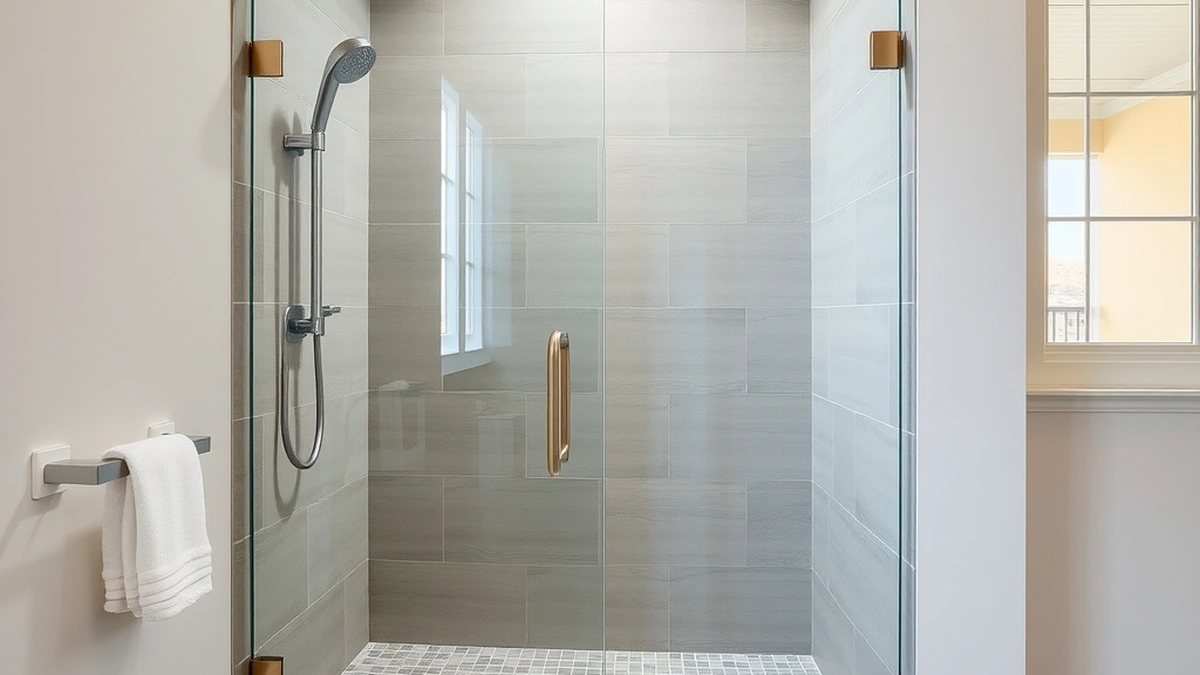
A shower conversion costs $3,000 to $12,000 installed, and about $200 to $800 per square foot of shower floor. Drain location, tile, and glass decide where in that range a job lands.
- Full conversion, installed
- $3,000–$12,000
- Cost per sq ft of shower
- $200–$800
- Electrical and permits
- $300–$1,200
- Comparable installed walk-in tub
- $3,000–$10,000
Some links on this page are affiliate links.If you buy through them we may earn a commission at no extra cost to you. We do not accept payment for rankings. Read the full disclosure.
A shower conversion costs $3,000 to $12,000 installed, or roughly $200 to $800 per square foot of shower floor. The bottom of that range is a preformed pan in the existing drain location with a curtain; the top is a curbless, fully tiled enclosure with a frameless glass panel and moved plumbing. Most jobs land between.
What the Conversion Actually Includes
A shower conversion is the removal of a bathtub and the installation of a shower in the same footprint. It is not a cosmetic swap: the tub comes out, the drain and overflow are reconfigured, the walls are waterproofed, a pan or tiled base is built, and the enclosure is fitted.
The finished floor area is typically 15 square feet — a 36 by 60 inch alcove, which is the same footprint the tub occupied. Converting does not usually add floor space to the bathroom, though a curbless design can make the room feel larger.
The Installed Cost Range
| Scope | Installed cost |
|---|---|
| Preformed pan, existing drain, curtain | $3,000–$5,000 |
| Preformed pan, tile walls, glass door | $5,000–$8,000 |
| Tiled pan, tile walls, framed glass | $7,000–$10,000 |
| Curbless, tiled, frameless glass | $9,000–$12,000 |
Those tiers are estimates built from the market range, not quotes. Per square foot, $3,000 divided by 15 square feet is $200, and $12,000 divided by 15 is $800. The rate is high because the divisor is a small floor, exactly as it is with a walk-in tub.
For the tub side of the comparison, walk-in tub cost per square foot does the same division.
Where the Money Goes
Here is an illustrative breakdown of a $6,200 conversion, with each line treated as an estimate.
- Shower pan or base: $1,200
- Wall tile and setting materials: $1,900
- Plumbing modification: $1,400
- Glass door or panel: $900
- Permit and electrical: $800
- Total: $1,200 + $1,900 + $1,400 + $900 + $800 = $6,200
- Per square foot: $6,200 ÷ 15 = $413
Two lines dominate: tile and plumbing. Move the drain and the plumbing line can double, because the subfloor has to be opened and the trap repositioned. Choose a large-format tile and the material cost per square foot climbs while the labor to set it may fall slightly — the net is rarely a saving.
What Moves the Price Most
Drain location. If the existing tub drain sits where the new shower drain needs to be, the connection is short. If it does not, the floor comes up.
Curb or curbless. A curbless shower needs the floor recessed between joists or built up with a sloped subfloor, plus full waterproofing. That is carpentry, waterproofing, and time.
Enclosure. A curtain rod is a few hundred dollars at most; a frameless glass panel is a four-figure line item once tempered glass, hardware, and installation are counted.
Tile. Ceramic is the cheap end, porcelain and natural stone the expensive end. Large tiles cost more per square foot but less per square foot to install in some cases. Mosaic floors cost more in labor because there are more grout lines.
Permits and electrical. Permit and electrical work runs $300 to $1,200. A new exhaust fan, a light inside the shower, or a heated floor all require a circuit and an inspection.
Structural surprises. Rotted subfloor around an old tub drain, a joist notched by an earlier plumber, or galvanized supply lines that crumble when touched. None of these are visible until demolition.
Conversion vs Walk-In Tub
| Factor | Shower conversion | Walk-in tub |
|---|---|---|
| Installed cost | $3,000–$12,000 | $3,000–$10,000 |
| Floor area | 15 sq ft | 12.5 sq ft |
| Cost per sq ft | $200–$800 | $240–$800 |
| Threshold | 0–4 in | A few inches |
| Door or seal to maintain | None | Seal, $150–$500 |
| Seated bathing | Needs a bench | Built in |
The two projects cost about the same at the middle of the range. The conversion removes the moving part — the door seal — and gains floor area. The tub adds seated bathing and a smaller footprint. The walk-in tub vs walk-in shower comparison goes through the daily-use differences.
Costs People Forget
Demolition and hauling are sometimes quoted separately from installation, and a cast iron tub is heavy enough to carry a disposal fee. Wall repair behind the old surround is almost always needed once the tile comes off. Waterproofing membrane is a line item on a tiled job and is not optional. And if the bathroom has only one shower, the household needs a plan for the days the room is out of service.
Add a contingency of 10 to 15 percent to whatever the bid says. On a $6,200 job, 15 percent is $930, which is the difference between a completed project and a stalled one when the subfloor turns out to be wet.
Comparing Bids on the Same Scope
- Ask each bidder to list demolition, disposal, plumbing, waterproofing, tile, glass, electrical, and permit as separate lines.
- Confirm the drain location assumed in the quote, and whether relocation is included or billed as a change order.
- Ask what waterproofing system is specified, by name.
- Confirm whether the permit is pulled by the contractor and whether the inspection is scheduled.
- Compare the glass specification: tempered thickness, hardware brand, and whether installation is included.
- Ask for the finish date in writing, and what happens if the tile order runs late.
A bid that is $1,500 lower and omits waterproofing and the permit is not a lower bid. It is a different job.
Budgeting Realistically
Take the mid-point of the range you actually want — preformed pan with tile walls sits near $6,500 — add 15 percent contingency, and treat that as the number to finance. For the wider comparison, the tub-to-shower conversion cost guide covers structural variants, and shower conversion installation explains the sequence the crew should follow.
Frequently asked questions
How much does a shower conversion cost?
A tub-to-shower conversion runs $3,000 to $12,000 installed. The spread depends on the pan, tile, glass, plumbing changes, and local permit requirements.
What is the cheapest way to convert a tub to a shower?
Keep the drain where it is, use a preformed acrylic pan, and fit a curtain instead of glass. Those three choices avoid the two largest line items, plumbing relocation and enclosure.
Does a curbless shower cost more?
Yes. A curbless pan requires the floor to be recessed or built up and sloped, which adds framing, waterproofing, and labor beyond a standard curbed base.
How does it compare with a walk-in tub?
Installed walk-in tubs cost $3,000 to $10,000 and conversions cost $3,000 to $12,000. The ranges overlap, so layout and use decide more than price.
Are permits required for a shower conversion?
Usually, because the work involves plumbing and often electrical. Permit and electrical costs typically fall between $300 and $1,200.
How long does the job take?
A straightforward swap with a preformed pan can finish in three to five working days. Tile, glass, and plumbing relocation push it past two weeks.
Sources
Some links are affiliate links.If you buy through them we may earn a commission at no extra cost to you. We do not accept payment for rankings. Read the full disclosure.