Acrylic walk-in tub cost
Acrylic Guide: practical numbers, costs, and trade-offs, written independently.
Acrylic Guide: practical numbers, costs, and trade-offs, written independently. The guide below shows the numbers and the trade-offs.
- Typical range
- Varies by system and site
- First step
- Measure the space and confirm the load
- Professional help
- Recommended for structural or electrical work
Some links on this page are affiliate links.If you buy through them we may earn a commission at no extra cost to you. We do not accept payment for rankings. Read the full disclosure.
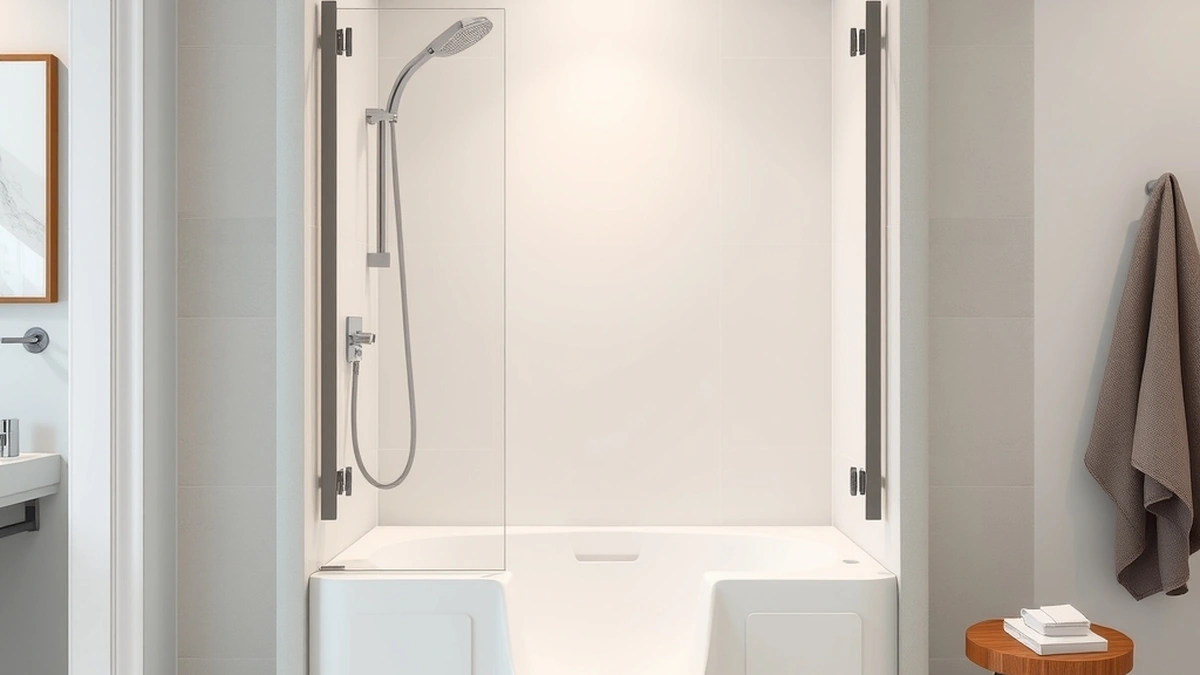
An acrylic walk-in tub costs $1,500 to $6,000 for the unit and $3,000 to $10,000 installed, with electrical work and permits adding $300 to $1,200 on top. The spread is wide because the unit price and the installation price are two separate purchases, and the second one is decided by your bathroom rather than by the tub you pick. Measure the route into the room before you fall in love with a model, because a tub that will not pass the doorway is the most expensive mistake in this category.
The numbers
- Acrylic tub unit: $1,500 to $6,000
- Standard installed price: $3,000 to $10,000
- Gelcoat tub unit: $1,000 to $3,500
- Walk-in shower conversion: $3,000 to $12,000
- Door seal replacement: $150 to $500
- Electrical and permit work: $300 to $1,200
All figures are US estimates for a standard residential installation. A second-floor bathroom, a narrow doorway, or an older panel that needs upgrading will push the total above the installed range.
Why the unit price varies so much
The shell is the cheap part. Acrylic is a thermoformed sheet, and the cost of forming it does not vary enormously between models. What varies is everything built into and around it.
Size is the first lever. A 30-by-52-inch tub and a 36-by-60-inch tub use different amounts of material and different moulds, and the larger unit can cost noticeably more for the same feature set.
Features come next. A basic soaker with a door is at the bottom of the range. Add air jets, a whirlpool pump, an inline heater, a fast-drain system, or a chromatherapy light, and the price climbs with each system and each additional component that can fail later. A built-in or tiled surround adds to the unit price as well, because it is a separate fabrication.
The door and frame are the third lever. A narrow, low-threshold door with a compression seal costs more than a simple swing door, and the frame that lets the door seal against the tub is a machined assembly, not a moulded lip.
Acrylic versus gelcoat
| Factor | Acrylic | Gelcoat |
|---|---|---|
| Unit cost | $1,500–$6,000 | $1,000–$3,500 |
| Construction | Thermoformed acrylic sheet | Gelcoat over a fibreglass layup |
| Surface | Smooth, color through the sheet | Glossy coating over a substrate |
| Repair | Patch kits exist; color match is fair | Chips can be repaired, color match varies |
| Typical service expectation | 10–15 years | 15–20 years |
Acrylic is the more common choice at the lower end of the price range, and it holds its color because the sheet is colored through rather than coated. Gelcoat is usually cheaper to buy and can outlast acrylic, but the finish is a coating, so a chip exposes the material underneath.
The full comparison is in acrylic vs gelcoat, and the gelcoat side has its own cost guide in gelcoat cost.
What installation adds
Installation is where the budget moves. A standard install covers removing the old tub or shower, setting the new tub level, connecting the drain and supply lines, sealing the surround, and testing the door.
Three items sit outside that scope and are frequently quoted separately. Electrical work for a pump, heater, or light is usually a licensed electrician’s job, and with the permit it runs $300 to $1,200. Floor support may need attention, because a walk-in tub full of water is a heavy point load. And the access route — the path from the front door to the bathroom — may require removing a door frame or a section of railing to get the unit in.
Worked examples
A mid-range acrylic unit at $2,400, standard installation at $1,800, and $600 for a dedicated electrical circuit comes to $2,400 + $1,800 + $600 = $4,800, which sits inside the $3,000 to $10,000 installed range.
A larger tub with air jets at $4,500, installation at $2,500, electrical at $900, and a permit at $300 comes to $4,500 + $2,500 + $900 + $300 = $8,200.
A basic gelcoat unit at $1,800 with a straightforward swap at $1,500 and no electrical work comes to $1,800 + $1,500 = $3,300. That is the bottom of the market, and it assumes the doorway, the floor, and the plumbing all cooperate.
Measure the access route first
Do this before you choose a unit, and write the numbers down.
- Measure the bathroom doorway: the clear opening with the door removed, not the frame width. Many interior doors give 30 to 32 inches of clear opening.
- Measure the narrowest point on the route — a hallway, a stair landing, a turn at the top of the stairs. The tub has to pass the tightest point, not the widest.
- Measure the bathroom floor space and check the swing of the door. A tub that fits the alcove but blocks the door is not installed yet.
- Check the floor structure and the subfloor condition where the tub will sit. A filled tub is heavy, and the manufacturer’s installed weight figure belongs in the conversation with your installer.
- Check the water heater. A walk-in tub holds more water than a standard tub, and a 40-gallon heater may not fill a large model without a recovery wait.
Give those numbers to the supplier before you order. Most walk-in tub models are available in more than one size, and the smaller shell is often the difference between a one-day install and a carpentry project.
Where the money is better not spent
Skip the feature list before you skip the installation quality. A $2,000 tub set level on a sound floor with a proper drain will outlast a $5,000 tub installed on a shimmed, out-of-level base, because the door seal works against the frame alignment every time it closes.
If the budget is tight, put the money into the door and the drain — the two parts that decide whether the tub works — and leave out the jets, lights, and heater. Those can be added to a later tub; a bad seal cannot be fixed with a feature.
For the wider comparison, see how much a walk-in tub costs and walk-in tub installation cost. If the bathroom cannot take a tub, tub to shower conversion cost covers the alternative, and walk-in tub vs walk-in shower compares the two layouts. For the shell material itself, start with acrylic vs fibreglass.
The bottom line
Budget $1,500 to $6,000 for the acrylic unit, then add installation to reach the $3,000 to $10,000 installed range, plus $300 to $1,200 if electrical work and a permit are needed. Measure the doorway, the tightest turn on the route, the floor, and the water heater before you order. The tub you can get into the bathroom is worth more than the tub with the longer feature list.
Frequently asked questions
What is the most important measurement?
Start with the ceiling or clearance number; it decides which systems can fit.
What does a typical project cost?
Costs vary by system and site access; the guide shows the line items and a planning range.
Can I install this myself?
Some tasks are DIY-friendly, but structural, electrical, and load-bearing work should be done by a licensed professional.
How long does installation take?
A simple setup is a weekend; a full build with electrical or structural work can take several weeks.
What should I check before buying?
Confirm dimensions, load ratings, and the manufacturer's installation requirements for your exact model.
Where can I find local help?
Ask a licensed contractor or installer who has worked with the same system and can inspect your site.
Sources
Some links are affiliate links.If you buy through them we may earn a commission at no extra cost to you. We do not accept payment for rankings. Read the full disclosure.