Handicap tub cost
What an accessible walk-in tub costs, unit and installed, plus the access measurements that decide whether the price holds or climbs.
An accessible walk-in tub costs $1,500 to $6,000 for an acrylic unit and $3,000 to $10,000 installed, with electrical and permits adding $300 to $1,200.
- Acrylic accessible unit
- $1,500–$6,000
- Gelcoat accessible unit
- $1,000–$3,500
- Standard installed
- $3,000–$10,000
- Electrical and permits
- $300–$1,200
Some links on this page are affiliate links.If you buy through them we may earn a commission at no extra cost to you. We do not accept payment for rankings. Read the full disclosure.
A handicap tub costs $1,500 to $6,000 for an acrylic unit and $3,000 to $10,000 installed. Gelcoat units run $1,000 to $3,500, and electrical work plus permits add $300 to $1,200. The number that decides your project is not the tub price — it is whether the bathroom and the route to it can take the unit.
Three Fixtures Sold Under One Search Term
“Handicap tub” is a shopping term, not a product category. It usually means one of three things, and they price differently.
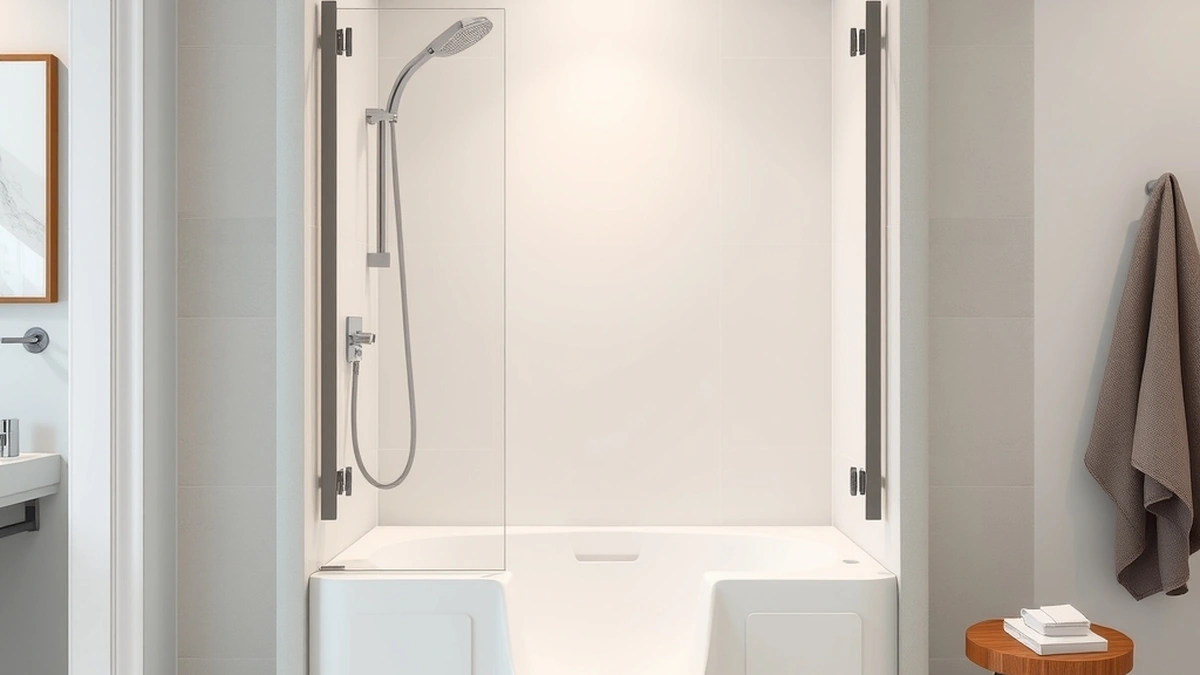
A walk-in tub is a molded shell with a hinged door and a low threshold, typically a few inches high, plus a built-in seat. This is the fixture most people mean.
A transfer tub is a shallow shell designed to be entered from a wheelchair by sliding across, with no door to negotiate. It takes more floor space and is less common in homes.
An accessible shower is a curbless or low-curb shower with a fold-down bench. It is not a tub, but it belongs in the same budget conversation, because it often does the same job for less structural work.
Prices below are for walk-in tubs, the fixture with the widest availability.
Unit Prices by Material
| Unit | Typical price | Notes |
|---|---|---|
| Gelcoat walk-in tub | $1,000–$3,500 | Coated fiberglass shell, lighter, lower entry price |
| Acrylic walk-in tub | $1,500–$6,000 | Solid sheet formed over a frame, more impact-resistant |
| Compact acrylic, 51 × 27 in | $1,500–$6,000 | Fits small alcoves, same material range |
| Accessible shower base | Quoted with the enclosure | Priced as part of a conversion, not alone |
The gap between gelcoat and acrylic is real but smaller than it looks once installation is included. A $1,000 gelcoat unit and a $1,500 acrylic unit are only $500 apart at the bottom of the range, while installation costs more than either.
What Installation Adds
Installation is not a rounding error. On a standard project it accounts for roughly 40 to 50 percent of the total.
- Low end: $3,000 installed − $1,500 unit = $1,500 for labor, plumbing, and disposal.
- High end: $10,000 installed − $6,000 unit = $4,000 for the same scope.
- Share of total: $1,500 ÷ $3,000 = 50 percent; $4,000 ÷ $10,000 = 40 percent.
That money covers delivery, setting the tub level on a sealed base, connecting the drain and overflow, securing the surround, and testing the door seal. It usually includes hauling the old tub away. It does not include electrical work unless the quote says so.
Electrical and permits are a separate line at $300 to $1,200. A pump, air blower, or heated seat needs a dedicated circuit, and a circuit needs a permit in most jurisdictions. On a $3,000 project, $1,200 of electrical work is 40 percent again on top. Ask for that line item in writing before comparing totals.
The Access Route Changes the Price
A walk-in tub arrives as one piece. It has to pass through the front door, along the hall, around any stair turn, and through the bathroom door.
Measure four things before you choose a model:
- The narrowest exterior door on the route, in inches.
- The narrowest interior door, usually the bathroom door.
- The width of any hallway corner or stair landing.
- The interior dimensions of an elevator, if the unit is going upstairs in a building.
A 30 inch door with the frame in place often will not take a 30 inch wide tub. Removing the door and frame buys a few inches; widening the opening is a carpentry job with its own permit implications. If the route fails, the choices are a compact unit, a knock-down model that assembles in the room, or a different fixture.
Accessories and What They Cost
Grab bars, a handheld showerhead, a transfer bench, and a non-slip mat are usually quoted separately from the tub. Prices vary enough by finish and supplier that a single national figure would be misleading — ask for each item as its own line.
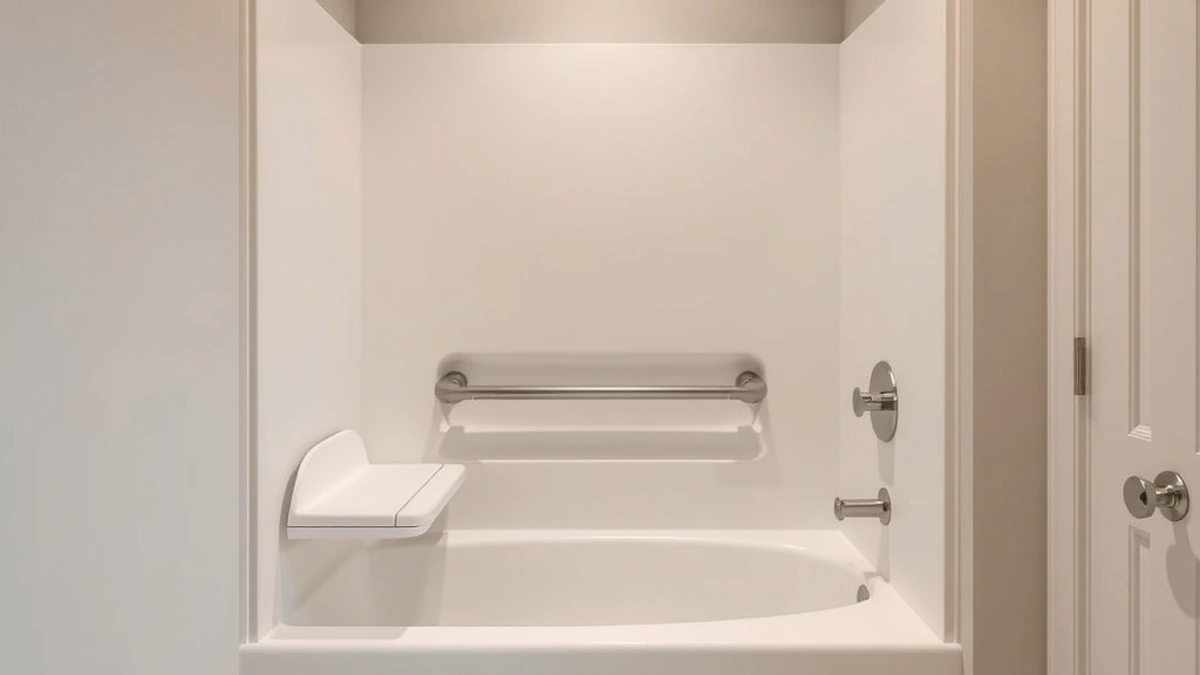
Two accessories are worth prioritizing over cosmetic upgrades. A handheld showerhead on a slide bar makes seated washing practical, and a properly anchored grab bar at the entry is the fixture most likely to be used every time. Both are cheaper than a pump or a heated seat and both address the reason the tub is being bought.
For the standards behind grab bar placement, the ADA Standards for Accessible Design set out heights and clearances that many products are designed around, even in a private home where the standards are not mandatory.
Accessible Tub vs Accessible Shower
| Factor | Walk-in tub | Curbless shower |
|---|---|---|
| Installed cost | $3,000–$10,000 | $3,000–$12,000 |
| Threshold | A few inches | 0–4 in |
| Seated bathing | Built-in seat | Needs a bench |
| Floor drain and slope | Standard tub drain | Requires a sloped pan |
| Step-free transfer from a chair | Difficult with a door | Easiest option |
| Seal maintenance | $150–$500 per replacement | None |
A conversion costs about the same and removes the door seal entirely, but it needs a sloped, waterproofed pan and usually more tile work. Households that want to soak and sit generally prefer the tub; households where a wheelchair is in daily use generally do better with a curbless shower. The tub-to-shower conversion cost covers what the second option involves.
Insurance, Funding, and Paperwork
Whether a policy contributes to an accessible tub depends on the policy, the diagnosis, and how the claim is filed. There is no universal answer, and any site that gives one is guessing. Ask the insurer in writing, before ordering, whether the fixture is covered as a medically necessary home modification or as a bathroom remodel.
Documentation usually matters more than the product. Keep the assessment or prescription, the itemized quote, and the invoice showing the tub separately from the labor. If the fixture is claimed as a medical expense, the tub portion and the installation portion may be treated differently.
The insurance coverage guide walks through the questions to put to an insurer.
Comparing Quotes on Equal Terms
- Ask for the unit, delivery, labor, plumbing, electrical, permit, and disposal as separate lines.
- Confirm the permit is included and named, not “handled by the installer” in conversation.
- Ask for the model number and the exterior dimensions in writing.
- Confirm whether the door seal is tested with water before the crew leaves.
- Check the warranty terms for the shell, the door, and the seal separately.
- Compare totals only after confirming all six items are on both quotes.
A quote $800 lower that omits the permit and the disposal is not lower. It is the same job with two bills still to come.
For the wider price picture, see walk-in tub cost and installation cost. If the bathroom is small enough that a compact unit is the only fit, walk-in tub dimensions lists the footprints to measure against.
Frequently asked questions
How much does a handicap tub cost?
An acrylic walk-in tub runs $1,500 to $6,000 as a unit, and $3,000 to $10,000 installed. Gelcoat units start lower, at $1,000 to $3,500.
Is a handicap tub the same as a walk-in tub?
In practice the search term covers the same products. Walk-in tubs, transfer tubs, and accessible showers are the three fixture types sold for step-free bathing.
Does insurance pay for an accessible tub?
Coverage depends on the policy and the reason for the fixture. Ask the insurer in writing before ordering, and keep the prescription or assessment documentation.
How much does installation add?
Installation is roughly 40 to 50 percent of a standard project. A $3,000 installed job with a $1,500 unit leaves $1,500 for labor, plumbing, and disposal.
What else should I budget for?
Electrical and permit work at $300 to $1,200, plus grab bars, a handheld showerhead, and any door widening needed on the delivery route.
Can a handicap tub be installed in a small bathroom?
Yes if the alcove takes a 51 by 27 inch compact unit. Measure the alcove and every doorway on the route before choosing a model.
Sources
Some links are affiliate links.If you buy through them we may earn a commission at no extra cost to you. We do not accept payment for rankings. Read the full disclosure.