Gelcoat Reviews: What to Expect
A practical look at gelcoat materials, durability, and what buyers should consider before choosing a walk-in tub.
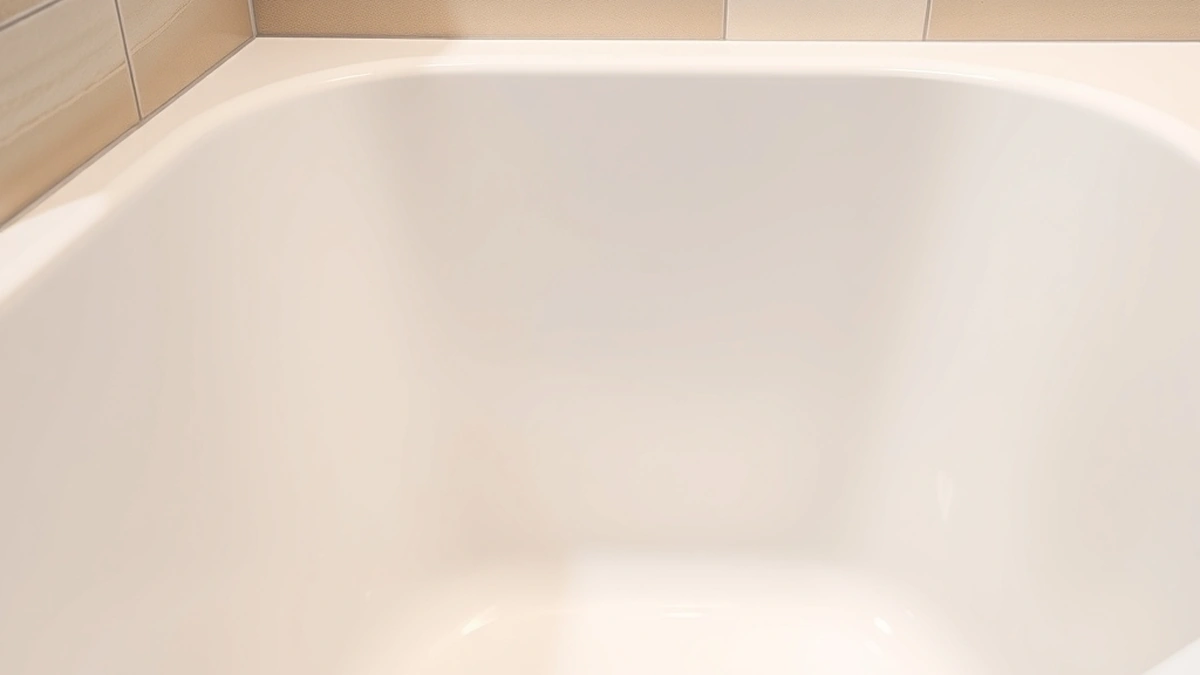
Gelcoat is a durable, UV-resistant polymer coating on tub interiors. Estimated costs range $1,000-$3,500 for the gelcoat layer, while full tub replacement averages $3,000-$10,000. Door seal replacements cost $150-$500.
- Typical range
- Varies by system and site
- First step
- Measure the space and confirm the load
- Professional help
- Recommended for structural or electrical work
Some links on this page are affiliate links.If you buy through them we may earn a commission at no extra cost to you. We do not accept payment for rankings. Read the full disclosure.
Gelcoat on a walk-in tub is a glossy polymer coating over a fibreglass layup, and what you can expect from it is a hard, bright surface that resists water and cleaning products well for its first decade, then begins to show chips at the door frame and dull patches where the coating has worn thin. Tub prices for gelcoat units run $1,000 to $3,500, below the $1,500 to $6,000 acrylic band, and the finish is the reason buyers choose one over the other.
What gelcoat is
Gelcoat is a pigmented polyester resin applied as the outer layer of a fibreglass moulding, curing into a hard, smooth film that carries the color and provides the water-facing surface. It is not paint and it is not a separate panel; it is the first layer of the layup, bonded to the fibreglass behind it.
That construction is why gelcoat feels solid and looks deep rather than thin. It is also why damage behaves differently from damage to acrylic: a chip takes the coating off and exposes the laminate, rather than marking a sheet that is the same color all the way through.
The numbers
- Gelcoat tub unit: $1,000 to $3,500
- Acrylic tub unit: $1,500 to $6,000
- Standard installed walk-in tub: $3,000 to $10,000
- Door seal replacement: $150 to $500
- Electrical and permit work: $300 to $1,200
- Walk-in shower conversion: $3,000 to $12,000
A gelcoat unit at $2,000 with a standard installation at $2,000 and no electrical work comes to $4,000 installed. The same bathroom with a $4,000 acrylic unit and a $900 electrical circuit comes to $6,900. The material choice is real money, but it is not the largest line in the project.
What holds up and what does not
Gelcoat’s strengths are chemical resistance and a hard, non-porous surface. It stands up to tub cleaners, it does not stain as readily as an unsealed surface, and the gloss holds longer than the surface of a thinly coated acrylic shell.
Its weaknesses are mechanical. A dropped object, a tool, or a heavy door strike can chip the coating, and a chip is visible because the material underneath is a different color. Repeated flexing around the door frame — the part of a walk-in tub that works hardest — is where gelcoat failures usually start.
Fading is the other long-term issue. Gelcoat is UV-stable compared with older finishes, but a tub set under a window will lose some depth of color over the years, and the change is gradual enough that owners notice it only when a mat or a bath tray is lifted.
Gelcoat versus acrylic
| Factor | Gelcoat | Acrylic |
|---|---|---|
| Unit price | $1,000–$3,500 | $1,500–$6,000 |
| Surface | Coating over fibreglass | Colored sheet through the thickness |
| Chip behavior | Coating chips, substrate shows | Mark stays the same color |
| Feel | Hard, glossy | Slightly warmer, smoother |
| Repairability | Patch kits; color match varies | Patch kits; color match fair |
| Expected service | 15–20 years | 10–15 years |
The comparison is closer than the price gap suggests. Gelcoat is cheaper and generally longer-lived; acrylic is more forgiving of impact and easier to color-match on a repair. Neither is a better material in the abstract — they fail in different ways, and which failure you would rather live with is the actual decision.
What buyers tend to flag
The recurring themes in owner accounts are worth knowing before you buy, not because they happen to every tub but because they describe where the material is stressed.
Chips at the door threshold come up most often, usually after a door has been closed against a seal that was not sitting flat. The chip is cosmetic, but it exposes the laminate and needs sealing to stop water getting in.
Dulling on the floor follows years of use and cleaning with abrasive pads. Gelcoat is hard but not scratch-proof, and a scouring pad takes the gloss off in a way that cannot be polished back by hand.
Color mismatch on repairs is the third theme. A patch can restore the surface, but blending a tinted coating into an aged gelcoat is difficult, and the repair is usually visible on close inspection.
None of those are reasons to avoid gelcoat. They are reasons to buy it with the door and the cleaning routine in mind.
Inspecting a gelcoat tub before you buy
- Look along the door frame and the threshold for chips, cracks, or areas where the coating looks thin or has a different sheen.
- Run a hand over the floor and the seat. A gelcoat surface should feel even; ripples or soft spots suggest the layup behind it is uneven.
- Check the color in daylight, not under showroom lighting, and look at the tub from the doorway rather than straight on.
- Ask what the warranty covers — the shell, the coating, or both — and how long the coverage runs.
- Ask whether a touch-up kit is available in the tub’s color, and whether the manufacturer supplies it.
Care that keeps the finish
Use a non-abrasive cleaner and a soft cloth or sponge. Avoid scouring pads, powdered cleansers, and anything labelled for heavy-duty bathroom scale on a coated surface. Rinse the tub after each use and dry the door seal, because standing water at the threshold is what drives most of the damage that shows up later.
Inspect the door seal quarterly and replace it when it hardens or tears. At $150 to $500, a seal replacement is cheap against a chip repair at the frame. The full maintenance routine is in gelcoat maintenance, and the failure modes are covered in gelcoat problems.
For the comparison that usually decides the purchase, read gelcoat vs acrylic. If the budget is the constraint, how much a walk-in tub costs shows where the money goes, and walk-in tub installation covers what the fitter needs to get right. Measure the doorway and the route into the bathroom before you order any unit, gelcoat or acrylic.
The bottom line
Expect a hard, glossy surface that handles water and cleaners well, a unit price of $1,000 to $3,500, and a finish that will chip rather than mark if something hits it. Gelcoat is a sound choice for a bathroom where the tub will be used carefully and cleaned without abrasives, and the installation quality will matter more to its service life than the material choice itself.
Frequently asked questions
What is gelcoat used for in walk-in tubs?
Gelcoat is a tough, protective polymer finish applied to the interior of tub shells to resist water, stains, and scratches.
How much does gelcoat cost for a tub?
The gelcoat layer itself typically costs between $1,000 and $3,500 depending on the manufacturer and tub size.
Does gelcoat scratch easily?
Gelcoat provides better scratch resistance than bare fiberglass, though heavy impacts can still leave marks.
Can I repair gelcoat instead of replacing the whole tub?
Yes, gelcoat patches and refinishing are available, but they require professional assessment to ensure structural integrity.
How often should I inspect gelcoat?
Inspect the gelcoat annually for cracks, peeling, or delamination, especially around door seals where water pools.
Is gelcoat better than acrylic for tub longevity?
Gelcoat generally outperforms standard acrylic in scratch resistance and UV stability, extending the life of the tub surface.
Sources
Some links are affiliate links.If you buy through them we may earn a commission at no extra cost to you. We do not accept payment for rankings. Read the full disclosure.