How long does walk in tub last?
How long does walk in tub last?: practical numbers, costs, and trade-offs, written independently.
How long does walk in tub last?: practical numbers, costs, and trade-offs, written independently. The guide below shows the numbers and the trade-offs.
- Typical range
- Varies by system and site
- First step
- Measure the space and confirm the load
- Professional help
- Recommended for structural or electrical work
Some links on this page are affiliate links.If you buy through them we may earn a commission at no extra cost to you. We do not accept payment for rankings. Read the full disclosure.
A walk-in tub lasts 10 to 20 years, with acrylic shells generally at the lower end of that band and gelcoat at the upper end. What decides where yours lands is not the material alone: installation level, door seal care, and whether water is left standing in the lines matter more than the label on the shell. The tub unit runs $1,500 to $6,000 for acrylic and $1,000 to $3,500 for gelcoat, and a $4,000 tub that is installed badly will not reach the life of a $2,000 tub that is installed properly.
What sets the service life
Service life here means the interval from installation to the point where repairs cost more than the tub is worth. Four things decide it.
The shell is the headline, but it is rarely the first failure. Acrylic is thermoformed sheet and resists cracking well; gelcoat is a coating over fibreglass and resists wear well. Both fail at fittings and edges before they fail across the floor.
The door seal is the working part. Every fill and drain cycle compresses and releases it, and it sits in water the whole time the tub is in use. A seal that hardens, tears, or grows mildew stops sealing, and water at the threshold is what turns a cosmetic problem into a structural one.
The drain and valve assembly is the second working part. Walk-in tubs drain through a low outlet, and a slow drain leaves water sitting against the door and in the low points of the line.
Installation decides how hard the first three have to work. A tub set out of level loads the door frame unevenly, and the seal takes the difference every time the door closes.
The numbers
- Acrylic tub unit: $1,500 to $6,000
- Gelcoat tub unit: $1,000 to $3,500
- Standard installed price: $3,000 to $10,000
- Door seal replacement: $150 to $500
- Electrical and permit work: $300 to $1,200
- Walk-in shower conversion: $3,000 to $12,000
Those figures frame the repair-versus-replace decision later in this guide, because the cost of keeping a tub alive is small against the cost of a new one until the shell itself fails.
The parts and what they cost to keep
| Part | What to watch | Cost if it needs work |
|---|---|---|
| Shell (acrylic or gelcoat) | Cracks, chips, soft spots | Repair quoted; replacement is a new unit |
| Door seal | Hardening, tears, mildew at the frame | $150–$500 |
| Drain and valve | Slow draining, water left in the basin | Quoted by access and parts |
| Pump and jets (if fitted) | Weak flow, noise, water left in the housing | Quoted by model |
| Electrical and controls | Heater or light faults, tripping | $300–$1,200 with permit |
Everything except the shell is a service item priced in the hundreds.
What shortens a tub’s life
An out-of-level installation is the most common cause of premature failure. The tub sits on its base, the door frame is set by the shell, and if the shell is twisted the door seal has to absorb the error on every cycle. It shows up as a leak at one corner of the door long before the seal is worn out.
Water left in the lines is the second. Water sitting in the pump housing, the jets, or a low point in the drain line keeps the internals wet between uses, and the residue it carries hardens into scale.
Hard water is the third. Scale builds on the finish, on the door seal, and inside the lines, and it is abrasive once it crystallises. A water softener or a regular descaling routine is cheaper than replacing the parts the scale attacks.
Finally, features carry their own risk. A tub with a pump, heater, lights, and a fast-drain system has more components that can fail than a basic soaker, and each one is a potential repair.
Keeping a tub in service
- Drain the tub completely after every use, and leave the door open so the seal and the basin can dry.
- Wipe the door seal dry and inspect it monthly for hardening, tears, or dark spots.
- Clean the basin with a non-abrasive cleaner, and descale the interior and the jets on the schedule the manufacturer gives.
- Run a hot water flush through the drain monthly, and have the line flushed annually if you live in a hard-water area.
- Check the tub is still level once a year. A tub that has settled will show a gap at the door before it shows a leak on the floor.
None of these take long, and each one addresses a failure that costs hundreds to fix. The maintenance detail is in walk-in tub maintenance, and the leak side is covered in door seal leaks repair.
Repair or replace
The arithmetic is usually clear. A door seal at $300 and a drain service at a few hundred dollars keep a sound tub running for years. A new installed tub is $3,000 to $10,000, and a walk-in shower conversion is $3,000 to $12,000.
Take a tub at year 12 with a leaking seal and a slow drain. Seal replacement at $300, drain work quoted at $250, and a $150 service call comes to $700. That is well under a tenth of the installed cost of a replacement.
Now take the same tub with a crack through the shell at the door frame. That is not a service item, and the repair is either a specialist shell repair or a new unit. Once the quote for repair approaches half the installed cost, replacement is the more sensible spend.
When to plan the replacement
Plan it when the shell has cracked at a stress point, when the door frame no longer sits flat, or when repeated seal failures keep coming back to the same corner. Those are signs the tub has moved or the shell has deformed, and no seal will fix a frame that is out of shape.
If the bathroom is being renovated anyway, compare the tub against a shower conversion at $3,000 to $12,000 before ordering a like-for-like replacement. The layout decision is cheaper to make while the walls are open.
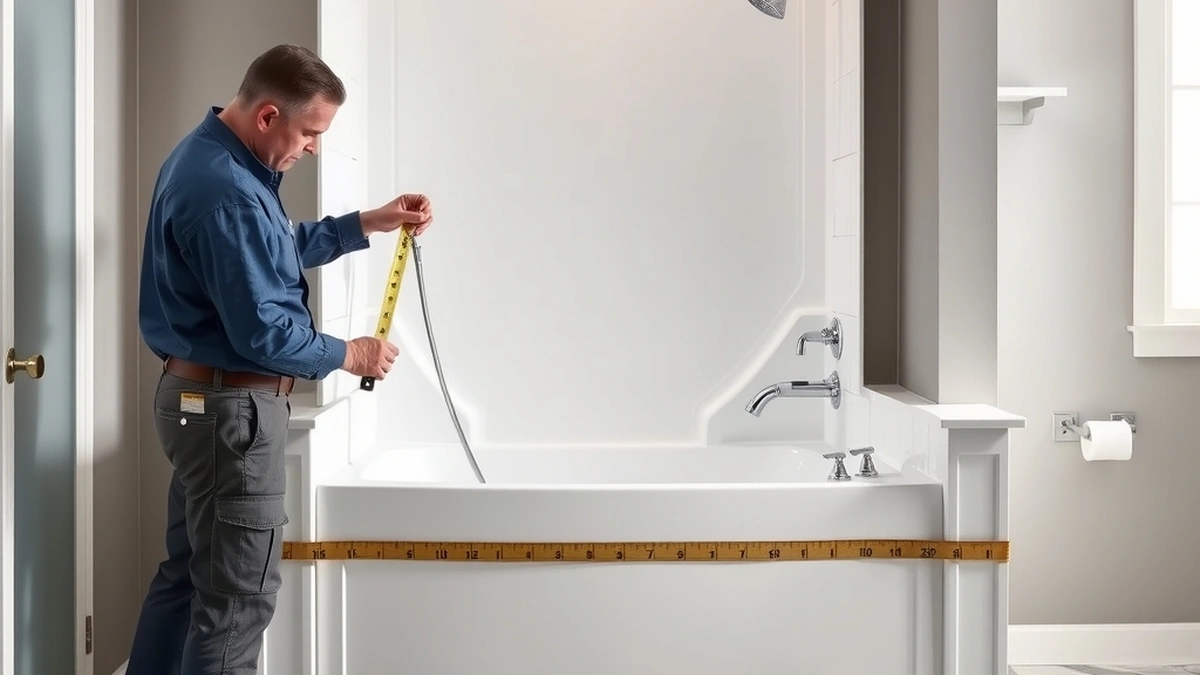
For the buying side, see how much a walk-in tub costs and walk-in tub repair. The material comparison is in acrylic vs gelcoat, and water left in the lines repair covers the failure that most often cuts a tub’s life short. Measure the access route before you order a replacement unit, because the doorway that accepted the old tub may not accept a larger new one.
The bottom line
Expect 10 to 15 years from an acrylic tub and 15 to 20 from gelcoat, with the door seal and drain deciding whether you reach the top of that range. Service items cost hundreds; the shell is the only part whose failure ends the tub. Keep it level, keep it dry, and replace the seal before it starts leaking, and the tub will last as long as the material allows.
Frequently asked questions
What is the most important measurement?
Start with the ceiling or clearance number; it decides which systems can fit.
What does a typical project cost?
Costs vary by system and site access; the guide shows the line items and a planning range.
Can I install this myself?
Some tasks are DIY-friendly, but structural, electrical, and load-bearing work should be done by a licensed professional.
How long does installation take?
A simple setup is a weekend; a full build with electrical or structural work can take several weeks.
What should I check before buying?
Confirm dimensions, load ratings, and the manufacturer's installation requirements for your exact model.
Where can I find local help?
Ask a licensed contractor or installer who has worked with the same system and can inspect your site.
Sources
Some links are affiliate links.If you buy through them we may earn a commission at no extra cost to you. We do not accept payment for rankings. Read the full disclosure.