Fibreglass vs Gelcoat: Which Walk-In Tub Material Lasts?
Compare fibreglass and gelcoat walk-in tubs by cost, durability, and door seal performance before you buy.
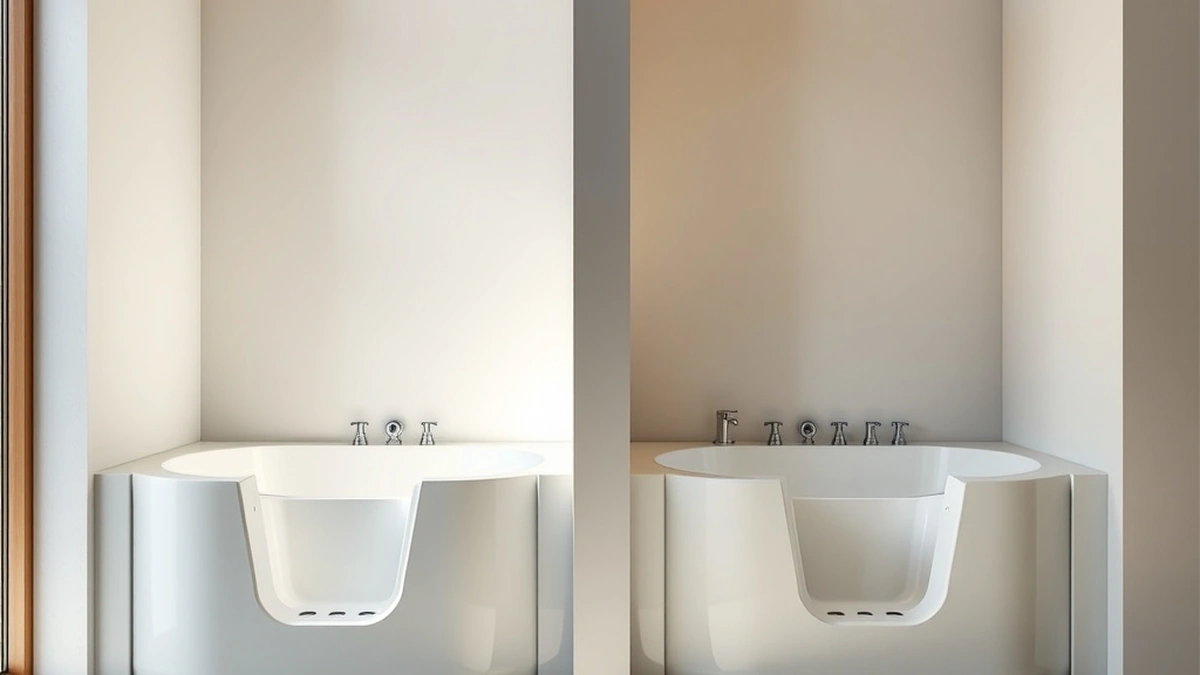
Gelcoat is a surface finish applied over fibreglass; fibreglass is the structural material. Most walk-in tubs use fibreglass with a gelcoat layer.
- Material type
- Structural composite vs surface coating
- Tub-only cost range
- $1,000–$3,500 (gelcoat tubs)
- Typical installed cost
- $3,000–$10,000
- Door seal replacement
- $150–$500
- Electrical and permits
- $300–$1,200
Some links on this page are affiliate links.If you buy through them we may earn a commission at no extra cost to you. We do not accept payment for rankings. Read the full disclosure.
Fibreglass and gelcoat are not competing materials. Fibreglass is the structural composite that forms the tub shell, and gelcoat is the coloured resin finish sprayed onto that shell before it cures. Most walk-in tubs described as fibreglass are actually fibreglass with a gelcoat surface layer.
Understanding the difference matters when you compare repair options, cleaning methods, and total installed cost. This guide explains how each layer behaves, what to expect on price, and where door seals fit into the picture.
What Fibreglass Is in a Walk-In Tub
Fibreglass, more accurately called glass-reinforced plastic, consists of fine glass fibres embedded in a polyester or vinyl ester resin. In walk-in tub manufacturing, layers of fibreglass mat and resin are built up in a mold to create a rigid, lightweight shell. The resulting structure supports the weight of the tub, water, and bather without requiring a steel frame.
A typical walk-in tub shell might weigh between 75 and 150 pounds depending on size and wall thickness. When filled, a 5-foot by 3-foot tub holding roughly 40 gallons of water adds about 334 pounds of water alone, not including the bather. The fibreglass laminate must carry that load continuously, so the number of layers and resin quality matter more than the surface colour.
Because fibreglass is porous at the microscopic level, it is never left exposed in a finished tub. The gelcoat layer seals the surface and provides the visible colour and gloss.
What Gelcoat Does
Gelcoat is a thin, pigmented resin coating applied to the mold before the fibreglass layers are added. Once cured, it becomes the outermost surface of the tub. It is typically about 15 to 25 mils thick—roughly the thickness of a few sheets of paper—and it is what you see, touch, and clean.
The gelcoat is not structural by itself. It protects the fibreglass from water absorption, UV exposure, and minor abrasion. If the gelcoat is chipped or cracked, water can reach the fibreglass underneath, which is why prompt repair matters. Surface scratches from abrasive cleaners can dull the finish over time, but the structural shell remains intact as long as the laminate is not compromised.
Cost Comparison by Category
Tub-only prices vary by size, door style, and features, but gelcoat-finished fibreglass walk-in tubs generally list from $1,000 to $3,500. Acrylic units, which use a different manufacturing process, typically list from $1,500 to $6,000. These are equipment-only estimates and do not include delivery, installation, plumbing changes, or electrical work.
Installed costs for a standard walk-in tub usually fall between $3,000 and $10,000. Here is how the arithmetic can add up for a mid-range example:
- Tub unit: $2,250 estimate
- Basic installation: $3,500 estimate
- Electrical and permits: $750 estimate
- Total: $6,500 estimate
If the existing bathroom needs a new dedicated circuit or a permit inspection, the electrical and permit line can range from $300 to $1,200. Those figures are separate from the tub material, so choosing fibreglass with gelcoat over acrylic does not eliminate installation variables.
For context, a walk-in shower conversion can range from $3,000 to $12,000 depending on whether the existing tub is removed, the subfloor is repaired, and a new shower base is installed. The surface material of the tub is only one part of the total project budget.
Durability and Wear
Fibreglass provides the impact resistance and structural stiffness of the tub. Gelcoat provides the wear surface. In daily use, the gelcoat is the part that contacts cleaning cloths, bath products, and water. Harsh abrasives can scratch the gelcoat, and heavy impacts can chip it. A chip that penetrates to the fibreglass should be sealed to prevent moisture from entering the laminate.
Fibreglass itself does not rot or rust, but it can flex if the underlying support is inadequate. A poorly supported tub bottom may develop stress cracks in the gelcoat over time. Proper installation on a level, stable subfloor reduces that risk.
Door seals are a separate wear item. The rubber or silicone seal around the walk-in door compresses against the tub frame to keep water inside. Seals typically last several years, but replacement costs $150 to $500 when they harden, tear, or leak. Seal replacement cost is the same whether the tub surface is gelcoat-finished fibreglass or acrylic.
Cleaning and Maintenance
Gelcoat surfaces should be cleaned with non-abrasive, non-bleach cleaners and a soft cloth or sponge. Scouring powders and stiff brushes can leave micro-scratches that dull the finish and make it harder to keep clean. Routine maintenance also includes wiping the door seal and track to prevent soap buildup that can prevent a watertight close.
For ongoing care, see our walk-in tub maintenance guide. If a seal begins to leak or a surface chip appears, our walk-in tub repair article covers what to look for before calling a service technician.
Installation Considerations
A walk-in tub is heavy before it is filled, and the weight increases dramatically with water and a bather. The bathroom floor must support the combined load, and the installer must level the tub so the door seal contacts evenly. Electrical requirements often include a GFCI-protected circuit, and permits may be required depending on local building codes.
Electrical and permit costs typically run from $300 to $1,200. These costs are not determined by whether the tub has a gelcoat finish, but they are part of the total installed price. For a full breakdown of installation steps and cost factors, see our walk-in tub installation overview.
When to Consider Other Materials
Fibreglass with gelcoat is common because it balances weight, cost, and repairability. Acrylic is another option, with tub units typically listing from $1,500 to $6,000. Acrylic is formed by vacuum-heating a sheet over a mold and is often thicker and more rigid than fibreglass, but it also costs more. The choice between materials should be based on the specific tub model, warranty terms, and installed price rather than the surface label alone.
If you are deciding between replacing a tub and converting to a shower, our walk-in tub versus walk-in shower comparison covers space requirements, cost ranges, and usage trade-offs. For DIY-minded homeowners, our DIY walk-in tub article explains what is involved in self-installation and where professional help is usually recommended.
Bottom Line
Fibreglass is the structure; gelcoat is the finish. You do not choose one instead of the other on a standard walk-in tub—you choose a tub model and then evaluate its total cost, installation requirements, and long-term maintenance. A gelcoat-finished fibreglass tub typically lists from $1,000 to $3,500, with installed projects commonly falling between $3,000 and $10,000 once labour, electrical, and permits are included. Door seal replacement, when needed, usually costs $150 to $500. Measure your bathroom, confirm floor support, and get an itemized installation quote before comparing models on surface finish alone.
Next, compare how much does walk in tub cost, walk in tub installation, walk in tub repair before you commit.
Frequently asked questions
Is fibreglass the same as gelcoat?
No. Fibreglass is the structural composite material, while gelcoat is the coloured, protective resin layer sprayed over the fibreglass shell.
Which costs more, fibreglass or gelcoat?
They are usually sold together. A gelcoat-finished fibreglass tub typically lists from $1,000 to $3,500 before installation.
How long does gelcoat last on a walk-in tub?
With routine cleaning and no abrasive scrubbing, gelcoat can stay intact for many years; chips or cracks should be repaired to protect the fibreglass underneath.
Can I repair a cracked gelcoat surface myself?
Minor surface chips can sometimes be sanded and refinished with a matching gelcoat kit, but deeper cracks that reach the fibreglass need professional assessment.
Does the door seal material depend on the tub surface?
No. Door seals are separate rubber or silicone components, and replacement typically costs $150 to $500 regardless of tub finish.
Should I choose a walk-in tub or a shower conversion?
A walk-in tub installation typically runs $3,000 to $10,000, while a walk-in shower conversion can range from $3,000 to $12,000 depending on scope.
Sources
Some links are affiliate links.If you buy through them we may earn a commission at no extra cost to you. We do not accept payment for rankings. Read the full disclosure.