Tub Too Tall to Step Over: Warning Signs
Learn the warning signs that your tub wall is too high to step over safely, plus measurement steps and replacement cost ranges.
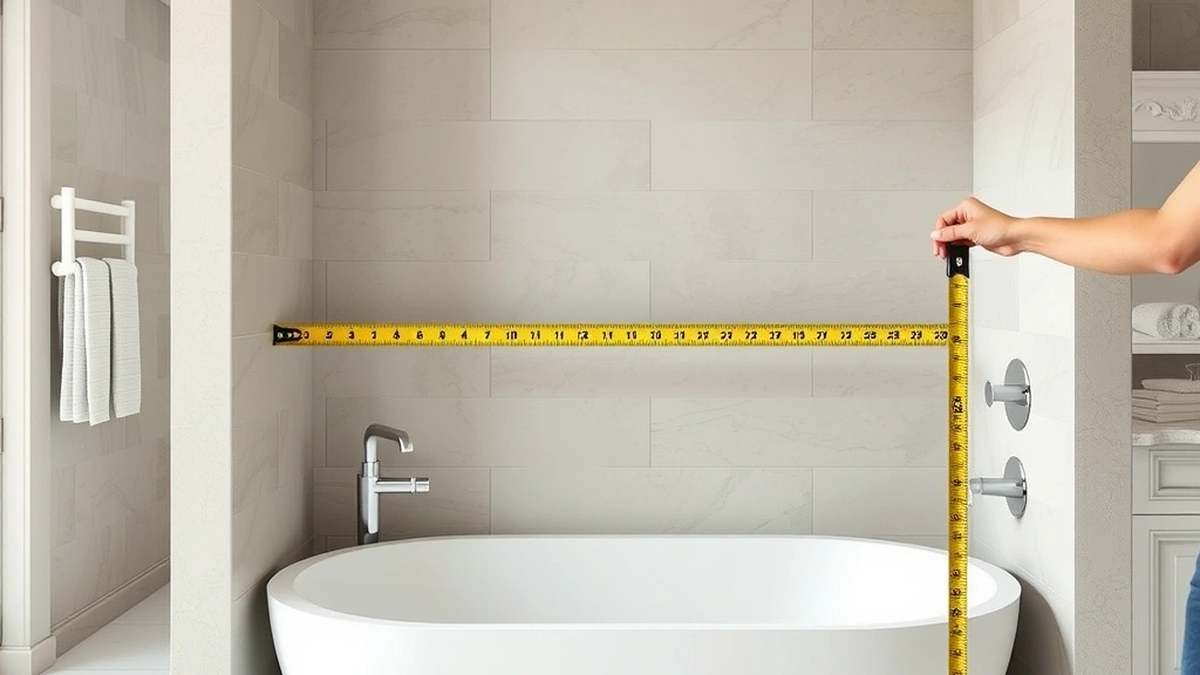
If the tub sidewall is taller than about 20 inches, most adults cannot step over it without a grab bar or transfer aid; measure from the finished floor to the top rim to confirm.
- Standard tub sidewall height
- 14–20 inches
- Common step-over limit
- ~20 inches
- Acrylic tub unit cost
- $1,500–$6,000
- Installed standard tub cost
- $3,000–$10,000
- Walk-in shower conversion cost
- $3,000–$12,000
Some links on this page are affiliate links.If you buy through them we may earn a commission at no extra cost to you. We do not accept payment for rankings. Read the full disclosure.
A standard bathtub sidewall is often too high for safe, unassisted entry. If you are asking whether your tub is too tall to step over, the first step is to measure the finished floor to the top rim. Most adults can manage a step-over height of roughly 20 inches; anything above that usually requires a grab bar, transfer bench, or a different bathing fixture.
This guide covers the warning signs, measurement method, and cost context for replacing or converting a tub that has become a barrier.
Warning Signs Your Tub Is Too Tall
You do not need a formal assessment to notice that a tub has become difficult to enter. These are the most common warning signs:
- You sit on the edge and swing both legs over at the same time instead of stepping in one foot at a time.
- You hold onto a towel bar, shower curtain rod, or nearby furniture for balance while entering.
- You feel unsteady standing on one leg while lifting the other over the rim.
- Water splashes onto the floor because you pause mid-step to regain balance.
- You avoid baths or showers because getting in feels like a chore or a risk.
If any of these apply, the tub sidewall height is likely the primary issue, not your mobility alone.
How to Measure Step-Over Height
Measurements come before sales claims. Take a tape measure and record the following:
- Finished floor to top of tub rim: This is the actual step-over height.
- Top of tub rim to the bottom of the tub: This is the interior depth, which affects how far you must lower yourself once inside.
- Floor to the top of any existing grab bar or shower door track: Obstructions can reduce usable clearance.
A standard alcove tub often measures 14 to 20 inches from floor to rim. If your measurement is above 20 inches, stepping over without support becomes harder for many people. If it is closer to 24 inches or more, unassisted entry is typically unrealistic for adults with limited mobility.
Record your numbers in inches. Do not estimate from memory, and do not measure from inside the tub, because that understates the step you must clear from the bathroom floor.
Door Seal Condition Matters
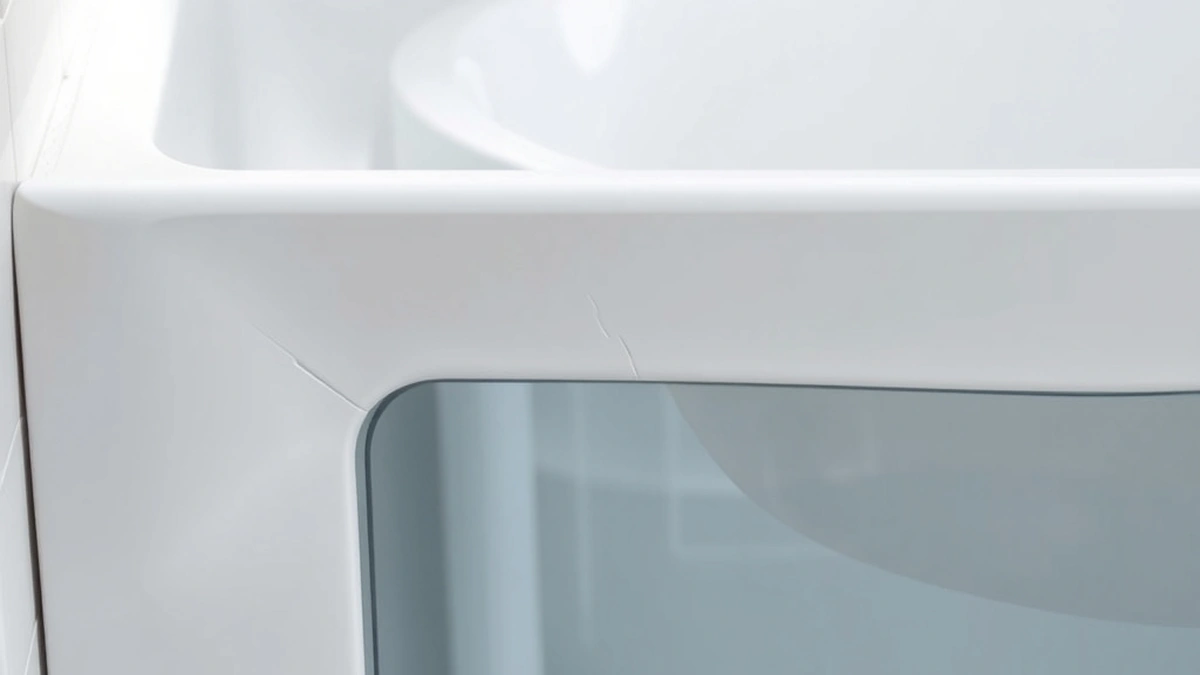
Before deciding to replace a tub, check the door seal if you already have a walk-in tub or a tub with a sliding door. A worn seal does not change step-over height, but it can leak water onto the floor. Wet flooring makes stepping over a tall rim more dangerous.
Signs of seal failure include:
- Visible cracks or tears in the rubber or silicone seal
- Water pooling outside the tub after use
- Mold or mildew buildup along the seal track
- The door no longer closes flush against the tub frame
Door seal replacement typically costs $150–$500. That is a small repair compared with a full tub replacement, but it will not solve a height problem. Fix the seal first, then measure the rim to decide whether the tub itself needs to go.
Cost Context for Replacement or Conversion
If the tub is too tall and cannot be made safe with a grab bar or transfer bench, replacement or conversion is the practical path. The following figures are estimates and vary by region, contractor, and materials:
| Option | Estimated Cost Range |
|---|---|
| Acrylic tub unit only | $1,500–$6,000 |
| Gelcoat tub unit only | $1,000–$3,500 |
| Installed standard tub | $3,000–$10,000 |
| Walk-in shower conversion | $3,000–$12,000 |
| Electrical and permit work | $300–$1,200 |
Here is how to think about the math. If an acrylic tub unit costs $4,000 and installation adds $4,000, the installed total is $8,000. If you also need a new circuit or permit, add $300–$1,200, bringing the range to $8,300–$9,200 for that example. A walk-in shower conversion at $7,500 plus $600 for electrical and permits totals $8,100.
These are estimates, not quotes. A licensed plumber or remodeler should inspect your bathroom before you commit to any option.
When a Grab Bar Is Not Enough
A grab bar can help with balance, but it does not reduce the height you must lift your leg. If the rim is 22 or 24 inches, grabbing a bar still requires balancing on one leg while lifting the other high. That is a fall risk for many users, especially if the floor is wet.
Transfer benches and bath lifts can help, but they add equipment to the bathroom and do not change the tub dimensions. If you are already using assistive devices daily, a walk-in tub or walk-in shower conversion may remove the step-over problem entirely.
Replacement Options to Consider
- Standard tub replacement: Keeps the same basic form but may allow a lower rim if you choose a different model. Installed standard tubs typically run $3,000–$10,000.
- Walk-in tub: Features a door and a low step-in threshold, though you must close and seal the door before filling. Unit and installation costs fall within the acrylic or installed ranges above.
- Walk-in shower conversion: Removes the tub and step-over entirely. Estimated at $3,000–$12,000 depending on the scope.
You can compare tub and shower options in more detail at /walk-in-tub-vs-walk-in-shower/. For installation expectations, see /walk-in-tub-installation/. If you are looking at repair rather than replacement, /walk-in-tub-repair/ covers common issues including seals and leaks.
Get a Professional Measurement
A contractor can confirm whether your tub rim height is within a safe range for your household. They can also check subfloor condition, wall surround integrity, and whether electrical and permit work is needed for a conversion. Electrical and permit costs typically run $300–$1,200.
Do not rely on showroom measurements alone. Your finished floor, tile thickness, and existing framing all affect the real step-over height.
Bottom Line
If your tub sidewall is taller than about 20 inches and you are struggling to step over it, the tub is likely too tall for safe unassisted use. Measure from finished floor to rim, inspect the door seal for leaks, and consider replacement or conversion if grab bars and transfer benches are not enough. Costs range from $150–$500 for a seal repair to $3,000–$12,000 for a full walk-in shower conversion, so start with the measurement before you spend.
For ongoing care of any tub you keep, see /walk-in-tub-maintenance/. If you want help choosing a new model, start with /best-walk-in-tub/.
Next, compare how much does walk in tub cost, walk in tub installation, walk in tub repair before you commit.
Frequently asked questions
What tub height is too tall to step over?
Many adults find a sidewall above 20 inches difficult to clear without assistance, though mobility varies by person.
How do I measure tub step-over height?
Measure vertically from the finished bathroom floor to the top edge of the tub rim, not from the tub interior.
Can a tall tub be lowered?
Not practically; you usually replace the tub or convert to a walk-in shower or walk-in tub.
Does door seal wear affect step-over height?
No, but a failing seal can leak onto the floor and create a slipping hazard near the tub.
What is the cost range for a walk-in tub conversion?
A walk-in shower conversion typically runs $3,000–$12,000 depending on materials and labor.
Should I hire a professional for tub replacement?
Yes, because tub removal, plumbing, electrical work, and permits usually require licensed trades.
Sources
Some links are affiliate links.If you buy through them we may earn a commission at no extra cost to you. We do not accept payment for rankings. Read the full disclosure.