Common Fibreglass Problems in Walk-In Tubs
Learn about common fibreglass problems in walk-in tubs, including cracks, gelcoat wear, and repair costs.
Fibreglass walk-in tubs commonly develop gelcoat cracks, surface scratches, and flex-related leaks. Most issues are cosmetic, but structural cracks can lead to water damage and require professional repair or replacement.
- Material
- Fibreglass-reinforced plastic with gelcoat finish
- Common issues
- Gelcoat cracks, crazing, flex, surface wear
- Repair cost
- $150–$500 for seal; $1,000–$3,500 for gelcoat work
- Full unit range
- $1,500–$6,000 before installation
Some links on this page are affiliate links.If you buy through them we may earn a commission at no extra cost to you. We do not accept payment for rankings. Read the full disclosure.
Fibreglass walk-in tubs are built from layers of fibreglass-reinforced plastic coated with a gelcoat finish. Over time, that finish can crack, craze, or wear through, and the underlying material can flex under load. These problems are usually cosmetic at first, but untreated cracks can allow moisture behind the surround and lead to costlier repairs.
What Fibreglass Problems Look Like
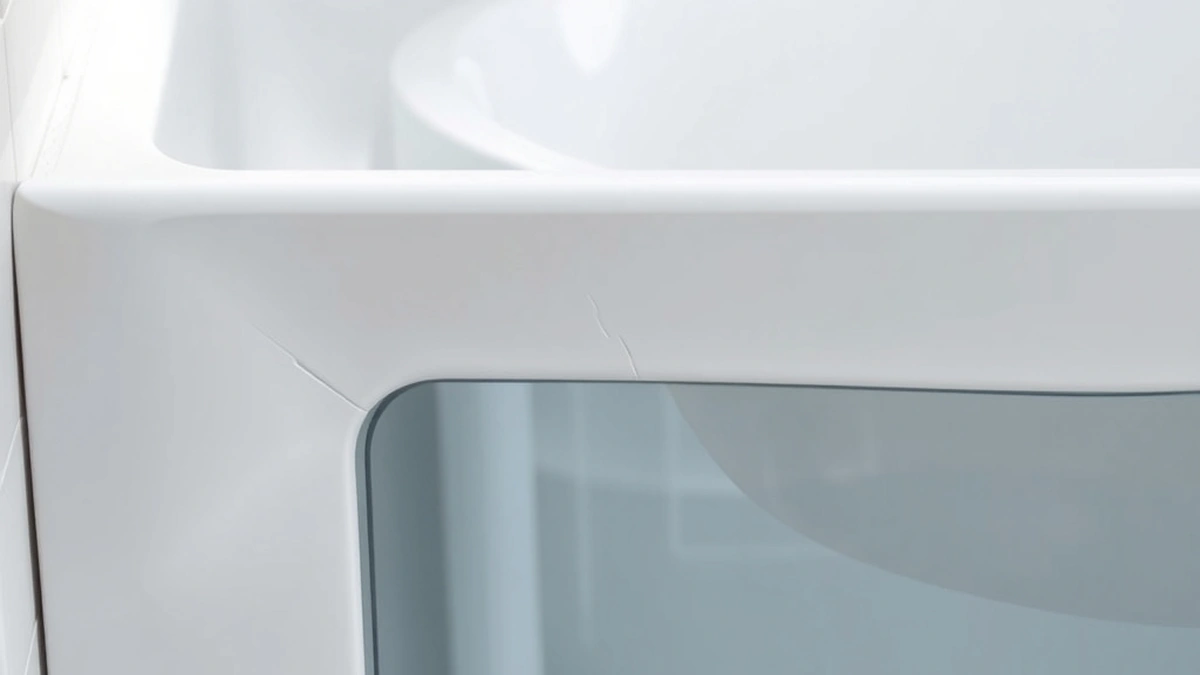
The most visible fibreglass problems appear on the gelcoat, which is the thin outer layer that gives the tub its smooth, glossy surface. Hairline cracks often show up around the door frame, faucet openings, and seat edges. Crazing, a network of fine spiderweb cracks, can develop from repeated cleaning with abrasive products or exposure to temperature swings. Surface scratches from dropped objects or harsh scrubbing dull the finish and can trap soap scum.
Deeper structural cracks are less common but more serious. A crack that runs through the fibreglass laminate, rather than just the gelcoat, can compromise the tub shell. If water seeps through, it can damage the subfloor or surrounding drywall. Because walk-in tubs have a door seal that must remain watertight, any movement in the tub shell can also stress that seal and cause leaks.
Flex and Weight Load
Fibreglass is lighter than cast iron or steel, which makes it easier to move into a bathroom. That lightness comes with a tradeoff: unsupported fibreglass can flex under weight. A person weighing 200 pounds stepping into a tub creates a concentrated load on the floor and seat area. If the tub is not fully supported during installation, the shell may bow slightly each time someone enters or exits.
That repeated flexing stresses the gelcoat, which does not stretch as much as the fibreglass beneath it. Over months or years, the gelcoat can crack at stress points. The arithmetic is straightforward: a 200-pound user plus 40 gallons of water (about 334 pounds) puts roughly 534 pounds of load on the tub floor, not including the weight of the tub itself. Installation manuals typically call for a level, fully supported base to minimize movement.
Door Seal and Surround Stress
Walk-in tubs depend on a compressed door seal to keep water inside. If the fibreglass shell flexes or settles unevenly, the door may not close with the same pressure every time. A compromised seal can leak onto the bathroom floor. Door seal replacement typically costs $150–$500, depending on the model and labor rates.
The area around the door opening is also a common crack location because cutting into the fibreglass removes some structural continuity. Reinforcement around the opening varies by manufacturer. If you notice water on the floor after a bath, check the seal first, then look for hairline cracks near the door frame and hinge area.
Repair Costs and Options
Surface gelcoat damage can often be repaired without replacing the tub. A professional refinishing or gelcoat repair job typically ranges from $1,000–$3,500, depending on the tub size and extent of damage. That is less than buying a new acrylic tub unit, which lists at $1,500–$6,000 before installation. A fully installed standard walk-in tub often runs $3,000–$10,000, including plumbing and electrical work.
If the fibreglass laminate itself is cracked or the tub has leaked for a long time, replacement is usually the safer choice. Electrical and permit work can add $300–$1,200 to a replacement project. Some homeowners consider a walk-in shower conversion instead, which ranges from $3,000–$12,000. The right choice depends on the condition of the existing tub, the subfloor, and the bathroom layout.
| Option | Estimated Cost (USD) |
|---|---|
| Door seal replacement | $150–$500 |
| Gelcoat repair or refinishing | $1,000–$3,500 |
| New fibreglass walk-in tub unit | $1,500–$6,000 |
| Installed standard walk-in tub | $3,000–$10,000 |
| Walk-in shower conversion | $3,000–$12,000 |
| Electrical and permit work | $300–$1,200 |
These figures are estimates. Actual prices vary by region, contractor, and tub model.
Prevention and Maintenance
Regular care can slow fibreglass wear. Use non-abrasive cleaners and a soft cloth or sponge. Avoid bleach-based scrubbers and harsh chemicals that can dull or etch the gelcoat. Rinse the tub after each use to remove soap residue, and wipe down the door seal to keep it pliable.
Check the door seal periodically for tears, compression loss, or mildew buildup. If the door no longer latches firmly or water appears on the floor, have the seal inspected. Small gelcoat scratches can sometimes be buffed out, but deeper cracks should be assessed by a repair professional before they spread.
Support matters as much as cleaning. Make sure the tub sits on a level, fully supported base. If the floor feels spongy or the tub shifts when you step in, the underlying structure may need reinforcement. Movement is one of the leading causes of fibreglass cracks, so a stable installation protects the finish.
When to Replace Instead of Repair
Not every fibreglass problem is worth repairing. If cracks run through the laminate, if the tub has leaked repeatedly, or if the gelcoat is worn thin across most of the surface, replacement may be more cost-effective than repeated refinishing. A new unit at $1,500–$6,000, plus installation, gives you a fresh shell and often an updated warranty.
Consider a walk-in shower conversion if stepping over a tub threshold has become difficult or if the bathroom layout no longer suits your needs. Conversions start around $3,000 and can reach $12,000 depending on tile, fixtures, and plumbing changes. Compare that against the cost of a new tub and installation to see which fits your budget.
For help estimating a full project, review the walk-in tub cost breakdown and installation process. If you already own a tub and need to address cracks or seal leaks, the repair guide covers common failure points. Routine upkeep is detailed in the maintenance article, which includes cleaning schedules and seal inspection steps.
Fibreglass problems are common, but they are manageable with early attention. Catch gelcoat cracks before they become structural leaks, keep the door seal in good condition, and make sure the tub is properly supported. Those steps will extend the life of the tub and help you avoid unnecessary replacement costs.
Next, compare how much does walk in tub cost, walk in tub installation, walk in tub repair before you commit.
Frequently asked questions
What are the most common fibreglass problems?
Gelcoat cracking, crazing, surface scratches, flex under weight, and leaks around the door seal or fixture openings.
Can fibreglass cracks be repaired?
Yes. Surface gelcoat cracks can often be sanded and refinished, while deeper structural cracks usually require professional fibreglass repair.
How much does fibreglass tub repair cost?
Gelcoat refinishing typically runs $1,000–$3,500, while door seal replacement is $150–$500. Full replacement can cost $1,500–$6,000 for the unit alone.
Does fibreglass flex under a person's weight?
It can. A 200-pound person standing in a tub creates concentrated load, and unsupported fibreglass may flex enough to stress the gelcoat over time.
Is fibreglass less durable than acrylic?
Generally, yes. Acrylic is often more resistant to scratches and UV fading, while fibreglass gelcoat can chip, crack, and wear with heavy use.
Should I replace a fibreglass tub with a walk-in shower?
It depends on the damage extent and budget. Shower conversions range from $3,000–$12,000, while a new walk-in tub unit costs $1,500–$6,000 before installation.
Sources
Some links are affiliate links.If you buy through them we may earn a commission at no extra cost to you. We do not accept payment for rankings. Read the full disclosure.